How did you choose the topic for your storybook and why did you choose that topic related to your content area? Since I am a Music Education major at USF, I decided that the best educational book for children that I could create would be about music.
What was the process like creating your storybook? Was it difficult or easy? After browsing through many incredible pieces of art available on Storybird, I settled on the art of “nidhi” because of the themes of family, the beautiful coloring, the clean lines, and the incorporation of music into the scenes. Once I finally decided on the artwork, writing the story was enjoyable and easy.
How can you use this as a future teacher? Give specific details of how you can incorporate this into a lesson either by having your students create a storybook or by you using one in a lesson. As a teacher, the Storybird website is useful because I can quickly and easily make books for my students about important topics. It can be something they take home and keep forever.
Additionally, I can use it as a tool to involve my students by allowing them to make their own books and even make their own artwork, and use this as a project they will never forget.
My analysis of three theories: Maslow’s Hierarchy of Needs, Bloom’s Taxonomy, and Backward Design. What information can they offer us, and why does it matter? Technology for Leading and Learning, Module 2
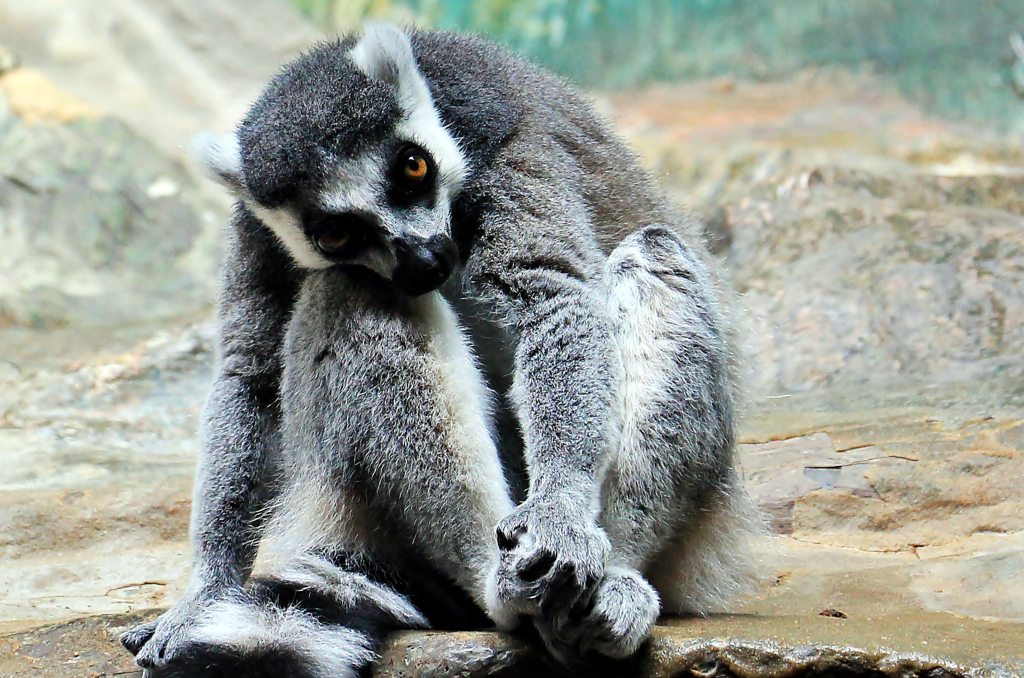
I was asked to include a picture encapsulating my reaction to the following psychological theories.
Maslow’s Hierarchy of Needs
Maslow’s Hierarchy of Needs, a 20th century psychological theory on the needs of humans and how it effects their behavior, is a proposal that I personally find predictable. Nothing about Maslow’s pyramidal approach to human needs is surprising, in my opinion, and when it was criticized as being too rigid (as pyramids are), he seemed to adjust and water down his theory into what I consider basic human logic. Harsh as this may sound, I am often skeptical of such psychological theories which impose grandiose life designs.
“Maslow (1943) initially stated that individuals must satisfy lower level deficit needs before progressing on to meet higher level growth needs. However, he later clarified that satisfaction of a needs is not an “all-or-none” phenomenon, admitting that his earlier statements may have given “the false impression that a need must be satisfied 100 percent before the next need emerges” (1987, p. 69).”
Above is a quote from an article on Maslow’s Hierarchy of Needs by simplypsychology.org. I find it compelling because it supports my claim regarding Maslow diluting his original theory.
To be fair, most of Maslow’s theory is filled with simple, logical facts. The first four stages of the pyramid- physiological needs, security needs, belongingness/love needs, and esteem needs- are basic principles which I can agree with. However, the concept of self-actualization being the ultimate point in one’s life journey seems vapid to me personally. It is described as “realizing personal potential, self-fulfillment, seeking personal growth and peak experiences.” Funny enough, Maslow refined his theory to include a final stage in the pyramid called Transcendence, which goes beyond the personal self. All in all, I do not find Maslow’s Hierarchy of Needs to be enlightening or uplifting, personally or socially. Cynical as it may sound, I think everything he proposes psychologically is something we as people can figure out easily.
Bloom’s Taxonomy
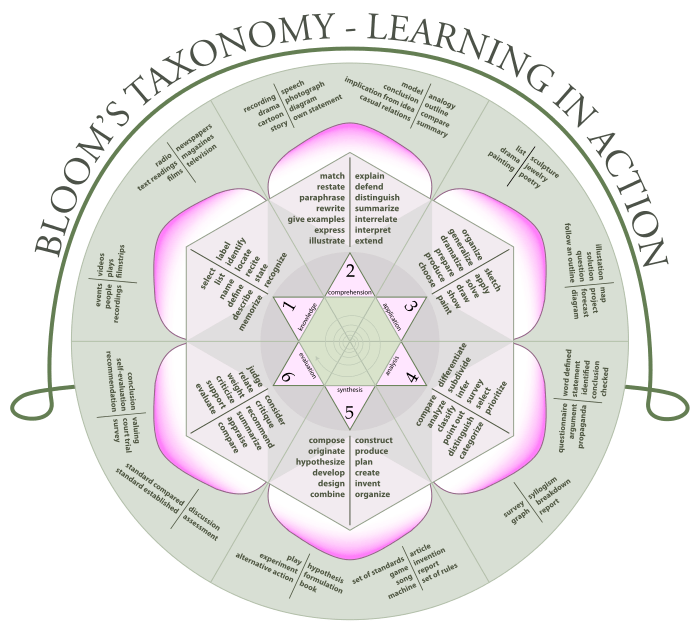
For all my optimistic readers, never fear! Despite my distaste for Maslow’s Hierarchy of Needs, I feel that Bloom’s Taxonomy is an excellent tool for productivity and compartmentalizing different areas of work. Three domains are detailed- cognitive, affective, and psychomotor- and are further divided. There is both the original domain, when Dr Benjamin Bloom created the tool, as well as a set of educational domains that are more reflective of today’s learning. Back when he created the domains, technology was not considered as heavily as it must be today.
Probably my favorite aspect of Bloom’s Taxonomy is the relationship between the domains and their key words. Maybe it’s just how my mind works, but associating a list of action verbs with each domain solidifies each concept and integrates his theory in the way I learn effectively.
In Andrew Churches’ applicative article of Bloom’s Taxonomy with Technology, he provides examples and explanations of digital actions which correspond to each domain. For instance, a verb example of the domain “remembering” is “googling”, and an example of “understanding” is “subscribing”. I find this process of digitalizing Bloom’s Taxonomy fascinating and directly applicable.
Backward Design
The last theory I will analyze in this blog posting was proposed by Grant Wiggins and Jay McTighe. Similar to Bloom’s Taxonomy, its purpose is to understand the educational process and master it. Yet instead of focusing on the learning aspect, backward design is intended for teachers. There are three clear stages which outline how to best create curriculum. Overall, I think that Backward Design is an excellent concept and tool which should be implemented by teachers. It is too easy to teach filler content in a classroom setting, which ends up being a huge waste of breath for the teachers, brain power for the students, and time for both parties. As important as busywork may be for students to lock key concepts into their brain, it is far more important to teach what you want students to end up learning. The philosophy that throwing thousands of facts at students to see which facts they internalize is ineffective and unrealistic. If teachers were instead specifically honing in on just a few big ideas with an end goal in mind, I think they would see the kind of results they dream about. Though it will take more focus and preparation to design curriculum that challenges students in a non-traditional manner, I believe it would be for the best.
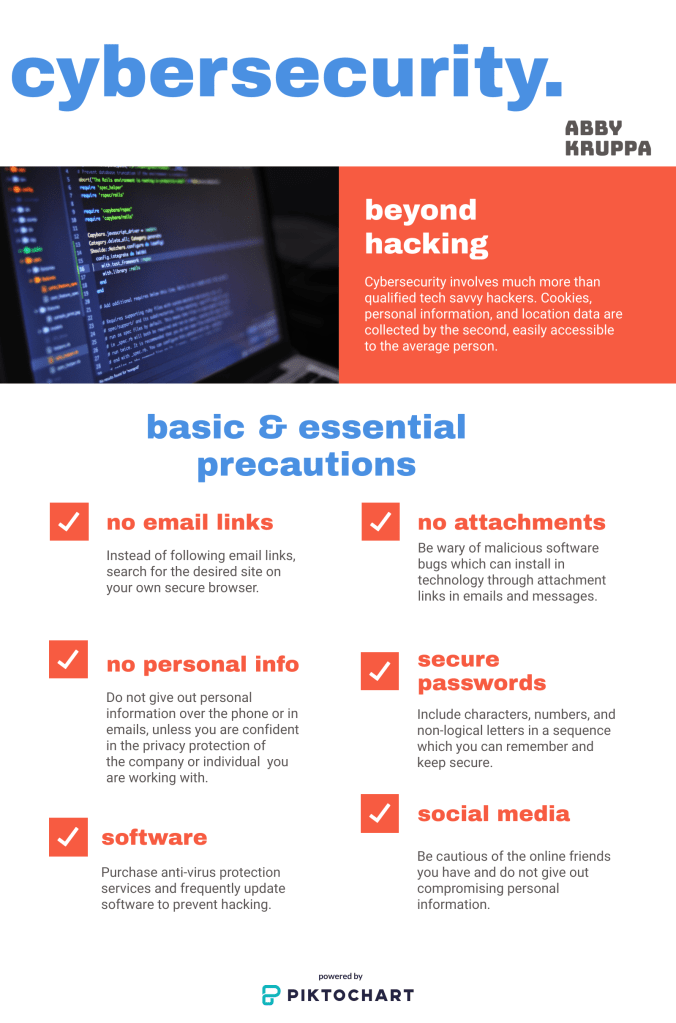
The following infographic is a simple review of extremely important guidelines to cybersecurity. Cybercrimes are prevalent and will only increase exponentially in the future. If we are not aware of the essential precautions, then we definitely will be liable to identity theft and hacking. This hacking can lead to our own safety being jeopardized, as well as the safety of friends and family.
Reflection on Emily’s Story
1. After watching the video about Emily being cat-fished by her neighbor, I was surprised that someone would create so many different Facebook accounts just to talk to themselves. I never expected any identify thief to excessively create so many different accounts- upwards of 50- and even submit information to the local news. It’s interesting because I think of identity theft as only being done by those seeking monetary profit, and by those only stealing one person’s identity, not creating an entirely new society from pictures of community members.
2. From Emily’s story, I learned the importance of verifying the people you friend on Facebook and remembering how public social media is in general. Any picture at all that you release to the public can be used against you, and allowing many people to be friends with you on social media can possibly endanger your safety.
3. I will use this story as a reminder of being internet aware. I would say that I already am a fairly paranoid person on social media and I release very little private information. I will make sure to be extra mindful of the people I allow to connect with me on social media, though.
1. I think that two suggestions to remember and utilize are to not distract from what you are saying and not read from the slides. I have sat through so many boring PowerPoint presentations with people writing an essay on the PowerPoint and reading it, as well as confusing presentations with random, eye-catching images that ruin the main objective of the presentation.
2. One thing that surprised me from one of the articles was that bullet points are actually not a good thing. I think because- as they mention in the article- all of the programs encourage bullet points, we automatically use them on almost every slide. It’s like being in default mode but I guess it makes sense that default mode is not ideal.
3. I have done many PowerPoint presentations, and as I have gotten older, they have definitely evolved into following the rules we learned from this module. I used to jam pack my PowerPoints with every piece of information I researched and thought of, but now I emphasize my speech with key words and helpful images or simple data charts. I try to limit my presentation material to about 5% of what I am saying instead of 95%.
4. I had a great experience with Google Slides and I had no idea the resource existed before! It is super easy to use and I love that it’s already on the internet instead of PowerPoint. It’s definitely an improvement from Keynote, which is the program I usually use.
In this YouTube video I’ve embedded above, I analyze Charles Cornell’s professional portfolio website featuring his original jazz albums and his YouTube channel. I discuss how his choices like website aesthetics and graphics, embedded videos and music, and biographical information effect the website audience’s perception of his website.
Today, we carry computers around with us in our pockets and backpacks and use them for virtually everything. They are our connection to the world beyond the people we see in daily life and allow us to learn and divulge information without ever stepping into a classroom. How are we able to accomplish so much with these miniature, efficient, and reliable devices? It all began with the advent of the computer into society and the steadily cheaper price of computers until they became less of a commodity and more of a necessity.
In 1965, a man named Gordon Moore working for Intel predicted that the microprocessors of computers would drastically improve in a pattern every two years. In other words, the transistors which process all of the data and information for a computer would become smaller, faster, and more reliable. These technological improvements, according to Moore, would in turn make computers available to the vast majority of the public. They would not be used just by scientific research facilities with piles of money, but they would be in the house- and pocket- of nearly every individual.
Many of Moore’s contemporaries doubted his prediction, claiming that Moore’s Law was an inaccurate and lofty estimate. However, every year the technological advancements seemed to further prove Moore’s Law. As for the future past 2020, the likelihood of Moore’s Law continuing to prove true till the end of time is low- something that he has addressed recent concerns over. Realistically and scientifically speaking, there are physical limits to how small a microprocessing chip can become.




 Abby Kruppa